Your entryway is the first area you see when you come home and the first impression guests receive. It also has to handle a steady stream of shoes, coats, bags, mail, keys, and other everyday items. Without a simple system, clutter can build up quickly.
The good news is that an organized entryway does not require a large budget or a major renovation. With a few practical storage solutions and regular habits, you can create a space that feels neat, welcoming, and easy to use.
Start by Clearing the Clutter
Before adding baskets, hooks, or shelves, remove everything from the entryway. Place the items in groups so you can see what is taking up space.
Create separate piles for:
– Items used every day
– Items used occasionally
– Items that belong in another room
– Items to donate, recycle, or discard
Be selective about what stays near the door. The entryway should hold things that are useful when leaving or arriving home. Extra decorations, old papers, and rarely used accessories can make the area feel crowded.
Once you have sorted everything, clean the floor, walls, and surfaces. Starting with a clear space makes it easier to plan an organization system that fits your needs.
Create a Drop Zone for Everyday Items
A drop zone is a specific place for the items you carry in and out of the house. It helps prevent keys, sunglasses, wallets, and small bags from being left on nearby furniture or floors.
A small tray on a console table can hold frequently used items. If you do not have room for a table, try a narrow wall shelf or a wall-mounted organizer.
You can also use separate containers for different types of belongings:
– A small bowl for keys
– A tray for sunglasses and wallets
– A basket for reusable shopping bags
– A folder or bin for incoming mail
– A hook for headphones or a small personal bag
Keep the drop zone simple. If it has too many compartments or rules, it may be difficult to maintain. Choose a system that matches the way your household already moves through the space.
Use Wall Space Wisely
When floor space is limited, look up. Walls can provide valuable storage without making the entryway feel crowded.
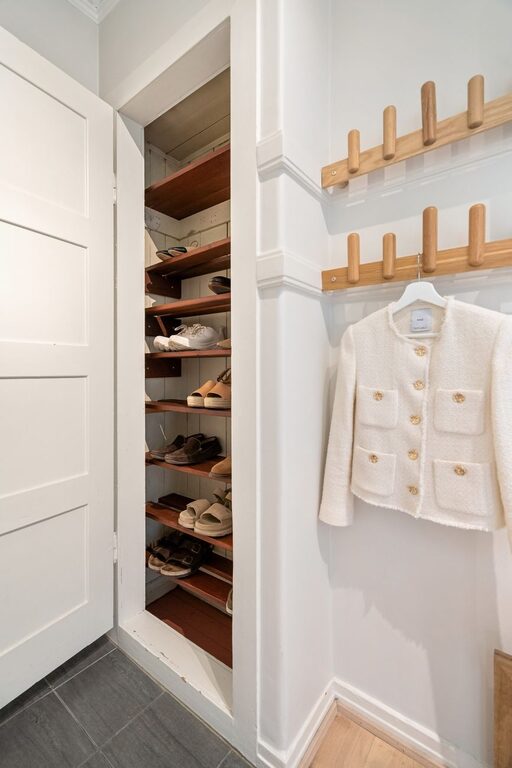
Hooks are one of the easiest options. Install several at a comfortable height for coats, jackets, hats, umbrellas, and bags. In a family home, assign each person a hook or a small section of wall. This makes it easier for everyone to put belongings away.
A peg rail can offer flexible storage because hooks can be moved as your needs change. Wall-mounted baskets are useful for mail, scarves, gloves, and other small items.
Consider adding a shelf above the hooks for seasonal accessories or decorative items. Use attractive boxes or labeled bins on the shelf to keep stored belongings contained and dust-free.
Make Shoe Storage Easy to Use
Shoes often create the most visible mess in an entryway. The best solution is one that makes putting shoes away as easy as leaving them on the floor.
A low shoe rack works well for pairs worn regularly. If you prefer a cleaner look, use a bench with storage underneath or a cabinet with doors. Baskets can also hold casual shoes, slippers, or children’s footwear.
Avoid storing every pair of shoes by the door. Keep only the shoes used during the current season in the entryway and move the rest to a bedroom closet or another storage area. This reduces clutter and leaves more room for the pairs you actually need.
A washable mat can help protect the floor from dirt and moisture. Choose a size that fits the area without blocking the doorway or making it difficult to open doors.
Add a Place to Sit
A seat makes the entryway more comfortable and practical, especially when putting on or removing shoes. A small bench, stool, or storage ottoman can work in many spaces.
If your entryway is narrow, choose a slim bench that does not interfere with foot traffic. A bench with a shelf or compartments underneath can provide extra room for shoes and bags.
In a smaller apartment, consider a wall-mounted folding seat or a compact stool that can be moved when needed. The goal is not to add a large piece of furniture but to create a convenient place for everyday tasks.
Organize Coats and Seasonal Items
Coats, scarves, hats, and gloves can quickly overwhelm a small entryway. Keep the number of items near the door limited to what is currently in use.
At the start of each season, review your outerwear and move out-of-season items to a closet or storage bin. This keeps the entryway more spacious and makes it easier to find what you need.
Use a small basket for winter accessories or a row of hooks for frequently worn scarves and bags. If several people share the space, label baskets or assign one to each person. Clear ownership makes tidying faster.
Create a Mail and Paper System
Mail can become a source of clutter if there is no designated place for it. Set up a simple system near the entrance, but avoid allowing papers to pile up indefinitely.
Use two containers labeled “To Sort” and “To File,” or choose a single inbox tray if you prefer a simpler approach. Recycle unwanted envelopes and advertisements as soon as possible.
Set aside a regular time to review the mail. A few minutes once or twice a week can prevent papers from spreading to counters, tables, and other rooms.
Keep important documents in a separate filing area rather than storing them permanently in the entryway. The entryway system should be a temporary sorting station, not a long-term filing cabinet.
Use Labels and Matching Containers
Labels can make an organization system easier to understand, especially in busy households. Label bins for items such as hats, pet supplies, sports gear, or reusable bags.
Matching containers can create a tidy appearance, but they are not required. Use what you already have before buying new storage products. Repurposed baskets, boxes, and small containers can work just as well.
Choose storage that suits the size and shape of your entryway. Tall, narrow units are useful in tight spaces, while a wider console may work better in an open foyer.
Keep the Entryway Easy to Maintain
An organized entryway needs a simple routine. At the end of each day, return misplaced items to their proper rooms and put shoes, coats, and bags in their assigned places.
Try a quick reset that takes only a few minutes:
- Put away shoes and outerwear.
- Return keys and small items to the drop zone.
- Sort or recycle visible mail.
- Remove items that belong elsewhere.
- Sweep or shake out the entry mat when needed.
Review the space every few weeks. If a basket is always overflowing or shoes are still collecting on the floor, adjust the system rather than blaming yourself. Good organization should support your habits.
Make It Welcoming
Once the practical storage is in place, add a few personal touches. A mirror can make the area feel larger and provide a convenient spot for a final check before leaving. A small plant, framed print, or simple vase can add warmth without taking up much room.
Keep decorations limited so the space remains functional. The best entryways combine useful storage with a welcoming appearance.
With a clear drop zone, accessible storage, and a short daily reset, your entryway can stay organized with minimal effort. Start with the items you use most, make every belonging easy to put away, and build a system that works for your home.