
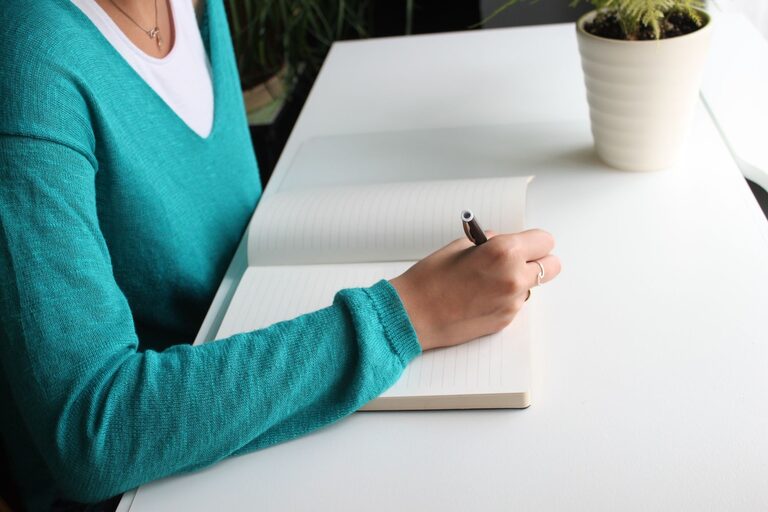
A notebook can be a simple place to write ideas, plan your day, track projects, or capture thoughts before they disappear. Yet choosing one is not always easy. There are countless sizes, paper types, layouts, covers, and binding styles to consider.
The most important question is not, “Which notebook is the best?” It is, “Which notebook will I actually use?”
A beautiful notebook that stays on a shelf is less useful than a basic one that travels with you every day. The right choice depends on your routines, writing style, and the kind of work you want the notebook to support.
Start With Its Main Purpose
Before comparing covers and paper, decide what you want the notebook to do. A notebook designed for quick notes may not work well for detailed planning or sketching.
Consider your most common needs:
– Daily planning and to do lists
– Meeting or class notes
– Journaling
– Creative writing
– Drawing and brainstorming
– Recording ideas on the go
– Tracking habits, tasks, or projects
– Keeping a long term reference collection
You can use one notebook for several purposes, but a clear primary use makes the choice easier. For example, a notebook for daily planning may benefit from a structured layout, while an idea notebook may work better with blank pages.
If you are unsure, think about a notebook you have used successfully in the past. What did you write in it? Where did you keep it? What made it convenient? These answers can reveal what you need now.
Choose a Size That Fits Your Routine
Notebook size affects whether you carry it, where you use it, and how much you can write on each page.
Small notebooks
Small notebooks fit easily into pockets, purses, and small bags. They are useful for quick reminders, shopping lists, and ideas that need to be captured immediately.
Their main limitation is writing space. If you often write several pages at a time, a small notebook may feel cramped.
Medium notebooks
Medium notebooks offer a practical balance between portability and usable space. They are suitable for daily notes, planning, journaling, and work tasks.
For many people, this is the safest starting point because it works in several settings without being too bulky.
Large notebooks
Large notebooks provide plenty of room for long entries, project planning, diagrams, and creative work. They are often comfortable to use at a desk.
The tradeoff is portability. A large notebook may be less likely to leave your home or office, so choose one only if you expect to use it mainly in one place.
A useful test is to imagine your normal day. Will the notebook be beside your computer, in your bag, or next to your bed? Choose a size that fits naturally into that location.
Pick a Page Layout You Will Enjoy
The page layout can make writing easier or create unnecessary friction. Choose a style that supports the way you naturally organize information.
Lined pages
Lined pages are a reliable choice for writing, lists, and notes. They provide guidance without imposing a strict system.
Look at the spacing between lines. Wide spacing can feel comfortable for larger handwriting, while narrow spacing gives you more room for text.
Dot grid pages
Dot grid pages provide subtle guidance for writing, tables, diagrams, and simple layouts. The dots are less noticeable than solid lines, which makes the pages flexible.
This format is popular with people who want structure but do not want every page to look the same.
Grid pages
Grid pages work well for charts, schedules, calculations, and technical sketches. They can also help keep handwriting aligned.
The visible pattern may feel distracting if you prefer a clean, open page.
Blank pages
Blank pages offer maximum freedom. They are useful for sketching, mind maps, creative writing, and mixed media notes.
They may be less helpful if you like consistent lines or find completely open pages difficult to organize.
Structured pages
Some notebooks include calendars, prompts, checklists, or planning sections. These features can be helpful when they match your routine.
However, a structured notebook can become frustrating if you regularly skip sections. Choose built in features only when you are likely to use them.
Pay Attention to Paper Quality
Paper affects how comfortable a notebook feels and which pens you can use. You do not need the most expensive paper, but it should suit your writing tools.
Consider these factors:
– Does ink show through to the other side?
– Does the paper feel smooth or textured?
– Does your pen glide easily?
– Are the pages thick enough for your preferred pen?
– Does the paper handle pencil, gel ink, or markers well?
If possible, test a few pages in the store. Write a sentence, make a quick list, and turn the page to check for show through. If you buy notebooks online, read reviews that mention paper thickness and ink performance.
Your favorite pen and your preferred notebook should work together. There is little value in choosing a notebook with excellent paper if it does not feel good with the tools you use every day.
Think About Binding and Page Access
The binding determines how easily the notebook opens and how comfortable it is to write in.
Spiral binding
Spiral notebooks often open flat, which makes them convenient for desks and classrooms. Many can also fold back on themselves to save space.
The spiral may catch on bags or feel uncomfortable under your hand, especially when writing near the edge of a page.
Sewn binding
Sewn notebooks are usually durable and often open more comfortably than tightly glued notebooks. They can be a good choice for journals and long term notes.
Some sewn notebooks do not lie completely flat when new, so check how flexible the binding is.
Glue binding
Glue bound notebooks are often slim and affordable. They can look clean and professional, but pages may be harder to keep flat. Lower quality binding may also loosen with heavy use.
Choose a binding based on where you write most often. If you write with one hand while standing, a flexible or spiral notebook may be easier. If you write at a desk, a sturdy bound notebook may be more comfortable.
Choose a Cover That Matches Your Environment
A notebook cover should be pleasant to hold and practical for the places where you use it.
A soft cover is usually lighter and easier to carry. A hard cover offers more protection and creates a firm writing surface when you are away from a desk.
Also consider durability. If the notebook will travel in a crowded bag, look for a cover that resists bending and pages that stay securely attached. If it will remain at home, appearance and texture may matter more than protection.
The design should encourage you to open the notebook. Choose a color, material, or style you genuinely like, but avoid selecting a notebook only because it looks impressive.
Avoid Buying More Notebook Than You Need
A common mistake is choosing a large, expensive notebook because it seems more useful. In practice, extra features can make a notebook feel too important to use freely.
You may hesitate to write ordinary reminders in a notebook with luxury paper or a decorative cover. A notebook should make writing easier, not make every entry feel special.
If you are starting a new habit, choose something affordable and approachable. You can always upgrade after learning what works for you.
Make It Easy to Use
Even the right notebook will go unused if it is inconvenient to reach. Give it a regular home and keep a pen nearby.
Useful locations include:
– Beside your computer
– On your desk
– In your everyday bag
– Next to your bed
– Near the place where you plan or review tasks
You can also give the notebook a simple first page with your name, its purpose, and the date you started using it. This creates a clear beginning without requiring a complicated system.
A Simple Final Checklist
Before buying, ask yourself:
- What will I mainly use this notebook for?
- Will I carry it or keep it in one place?
- Is the size comfortable for my handwriting?
- Do I prefer lined, dotted, grid, blank, or structured pages?
- Does the paper work with my favorite pen?
- Can it open comfortably where I plan to write?
- Is the cover durable enough for my routine?
- Does it feel inviting rather than intimidating?
The best notebook is not necessarily the most attractive, expensive, or feature packed option. It is the one that fits your daily life so well that opening it feels natural. Choose for your actual habits, make the notebook easy to reach, and let regular use—not perfection—determine whether it is the right one.